Any person aspiring to get into Digital Marketing has to have heard the term SEO. But what is SEO? How does it really work? What kind of role does it play in Digital Marketing? This post aims to answer all these questions and more while clearing any doubts a beginner may have about SEO. So, read to the end to make sure that you can answer the question “What is SEO and how does it work?”.
What is Search Engine Optimization (SEO)?
Search Engine Optimization is the process of getting traffic from organic or natural search results in search engines. Its goal is to improve your website’s position or ranking in search results pages (SERPs). It is to be noted that, the higher the website is listed in search results pages, the more people it will attract.
What are the Three Pillars of SEO?
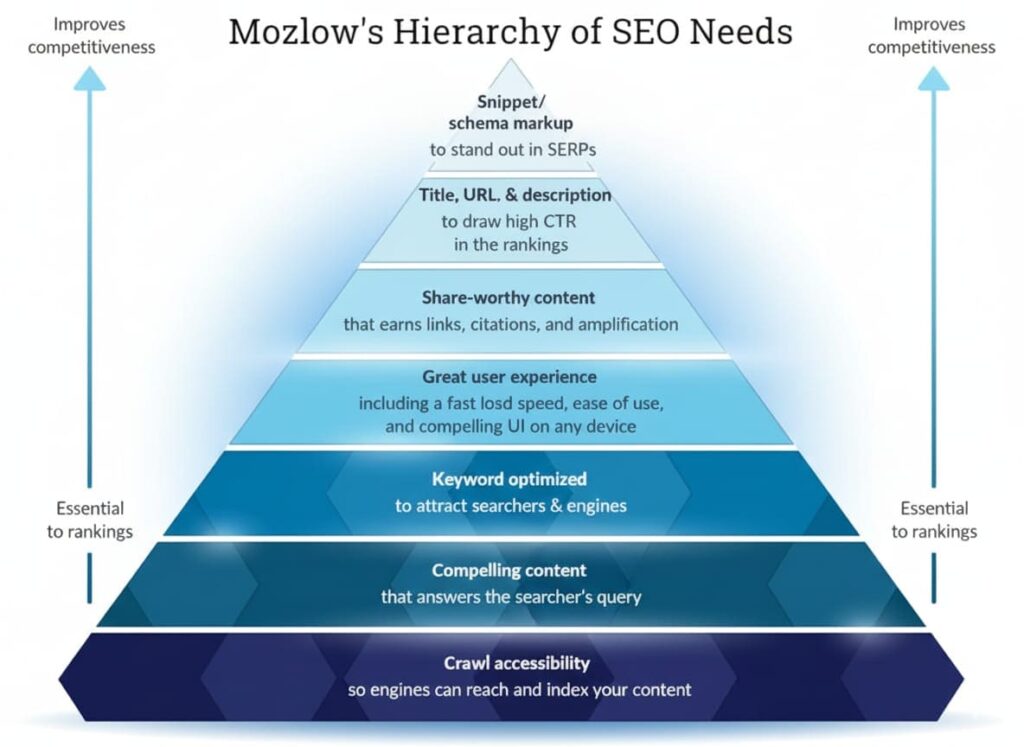
SEO changes frequently in small ways and differs for every search engine, the concepts of SEO do not. SEO can be broken into three core components or pillars that you need to know and get familiar with:
Technical SEO
Technical (Search Engine) Optimization is the process of performing activities on your site that will help in improving SEO but are not related to the content. It considers the technical aspects of a website that affect the performance of your site.
Some examples of technical optimization are:
- submitting your sitemap to Google.
- adding a robots.txt for your site.
- ensuring the images are compressed and use the right format.
On-Page SEO
On-Page (Search Engine) Optimization is the process of ensuring the content on your site is relevant and provides a great user experience. It includes target the right keywords in your content and can be done through a content management system.
Some examples of Content Management Systems are:
- WordPress
- Wix
- Joomla
- Shopify
Off-Page SEO
Off-Page (Search Engine) Optimization is the process of enhancing your site’s search engine rankings through activities outside of the site. This is highly dependent by high quality backlinks, i.e., links to your site from other sites. This helps to build the site’s reputation.
Brand Mentions on platforms like Reddit, YouTube, and LinkedIn are now powerful signals. If people are talking about you in community forums, Google sees that as a “human-proof” signal of authority that AI cannot fake.
Difference between Paid and Organic Search
Organic Search
Organic search is the informal searches that are shown on a search engine results page (SERP) as per their relevance to the query the user typed into the search engine. The ranking of these listings is done using complex algorithms that guide the ranking based on such criteria as content quality, the authority of the websites and user experience. To get a better ranking in such results, you employ Search Engine Optimization (SEO), which means optimizing the technical context of your site, developing valuable content. Although appearing in organic results is free and therefore no money is spent to the search engine when a person clicks, it takes a long term investment of time and effort to gain the credibility to rank high.
Paid Search
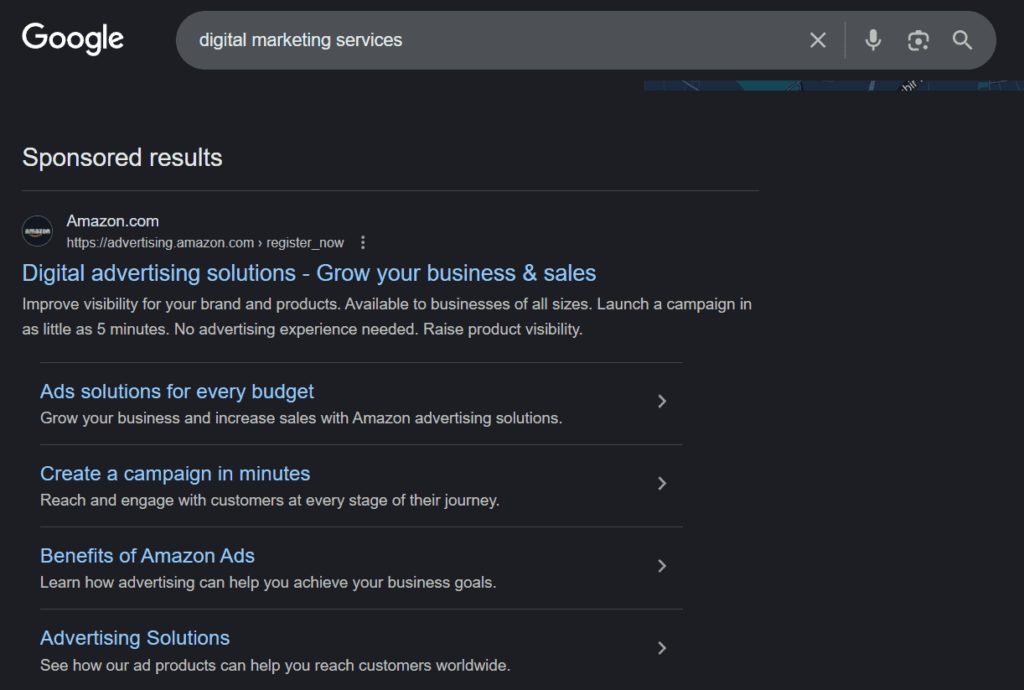
Paid search, also known as Pay-Per-Click (PPC), is the type of advertising that usually appears on the very top or bottom of a search results page, and is clearly labeled with some headings, such as Sponsored or Ad. In this type, the companies auction on certain keywords; as a user types those words, the search engine shows the advertisement of the winning companies. The paid search will offer near instant visibility unlike the organic search and can be targeted to certain demographics and location. But this is not the long term: you can be sure that the moment you stop paying the ads, your site will not be featured in such prime places anymore.
| Factor | Organic Search (SEO) | Paid Search (PPC) |
|---|---|---|
| Position | Appears in the middle/main body of the results page (the “blue links”). | Appears at the very top or bottom, clearly labeled as “Sponsored” or “Ad.” |
| Time | A long-term strategy; it typically takes 3–6 months to see significant movement in rankings. | Immediate results; ads can go live and start driving traffic within minutes of launching a campaign. |
| Payment | Free per click. You don’t pay the search engine, though you invest in content and technical optimization. | Pay-per-click. You pay a specific amount to the search engine every single time a user clicks your ad. |
| ROI | Higher long-term ROI. While slow to start, the cost per lead decreases over time as “free” traffic compounds. | Fast but fixed ROI. Provides a quick return on spend, but costs remain constant or rise with competition. |
| Share of Traffic | High volume; roughly 53% of all web traffic comes from organic search results. | Lower volume; accounts for about 15%–27% of traffic, but targets high-intent buyers. |
How Search Engines Actually Work?
To understand how a search engine works in 2026, imagine a digital librarian who doesn’t just store books but reads every page of every book in the world to find you the perfect answer.
This complex process is broken down into three main stages1
- Crawling
- Indexing
- Ranking.
1. Crawling (The Discovery Phase)
It means that before a search engine can give you an answer, it would have to know it was there. Automated programs referred to as crawlers or spiders are utilised by search engines.
- The Path: Crawlers begin with the list of the known web addresses and follow all links detected on these pages. This forms an extremely huge chain of discovery.
In the past, spiders only read text but nowadays they perform Rendering. That is, they will load your site like a normal human browser would, and run JavaScript and test whether your layout is mobile-friendly. When a bot is not able to look at what you have to say, it will not display it to users.
2. Indexing (The Storage Phase)
After the crawling of a page, the search engine breaks it down and what the page is about. This is called indexing.
- How it works: The engine analyses text files, images, and video files. This will be done in the year 2026, with more sophisticated AI and Natural Language Processing to decode the meaning and intent of the words, not merely match keywords. Good pages are indexed into the Index which is a massive database of all the known web pages.
- The Goal: Page storage and classification to be saved and recovered immediately.
3. Ranking (The Serving Phase)
As you enter a query to the search bar, the engine does not go out in search of that query to the entire internet, it goes out to its own Index.
- How it works: In milliseconds, a complex algorithm sorts through billions of pages. The implication of E-E-A-T (Experience, Expertise, Authoritativeness, and Trustworthiness) is highly important in ranking in 2026.
- Relevance: Does the content answer the specific question?
- User Experience (UX): Does the site load fast on mobile and have zero annoying pop-ups?
- Search Intent: Does the user want to or should they want to buy something, learn something, or go somewhere?
- The Objective: To have the most useful and high quality response at the very top.
Role of SEO Strategy in Digital Marketing
One of the most important pillars of digital marketing is Search Engine Optimization (SEO). Although paid ads, social media, and email marketing are some of the effective channels to create visibility, SEO guarantees long-term sustainable growth because the high-intent users are attracted to the company on an organic basis.
Good SEO strategy does not operate independently, it enhances all other digital market activities. Neil Patel, a New York Times bestselling author and widely renowned digital marketing expert, talks about elements in a successful SEO strategy on his blog.
1. SEO as the Foundation of Online Visibility
Majority of online travels start with a search engine. A proper SEO will enable your brand to appear when users are in need of a solution, a product, or information.
Why this matters:
- Increased search results increased brand credibility.
- Organic traffic is economical and reachable.
- Customers have faith in organic ranking rather than advertisements.
SEO makes sure that your site is available at the point of user need while taking the search intent into consideration.
2. Driving High-Quality, Intent-Based Traffic
SEO is unlike many other outbound methods since it targets needy users. Keyword research and search intent optimization attract the following:
- Informational users (guides, blogs)
- Navigational (brand searches) users.
- Ready to buy users (also known as transactional users).
This renders SEO among the greatest ROI digital marketing mediums in case it is done in a strategic manner.
3. SEO Supports Content Marketing
SEO and content are closely related as SEO guides:
- What to produce content on.
- Which keywords to target
- The structure of the content to make it readable and rankable.
Well-optimized content:
- Remains topical within a month or years.
- Supplies social media, email marketing, and lead generation.
- Feeds social media, email marketing, and lead generation
In brief, SEO transforms content into an asset that generates traffic, but not only a post.
4. Enhancing User Experience (UX)
SEO is more than just keywords in the modern world.
- Fast-loading pages
- Mobile-friendly design
- Clear navigation
- Useful and quality content.
With a search engine optimization you are also enhancing the user experience with resultant:
- Lower bounce rates
- Higher engagement
- Better conversions
Good SEO = good UX.
5. SEO Strengthens Brand Authority and Trust
Always appearing in the first page creates authority in your niche. Users link top rankings to trust and knowledge.
- Increased brand recall
- Higher click-through rates
- Competitiveness against paid-only brands.
In the long run, SEO makes your brand a go-to resource, rather than any other advertiser.
6. SEO Complements Paid and Social Media Marketing
Search engine optimization information drives other digital channels:
- High-performing keywords drive the strategy behind Google Ads campaigns.
- Posts on blogs increase interaction in social media.
- Home page optimization enhances conversion.
Searchers click more often on websites listed at the top of the results page.
7. Long-Term Growth and Measurable Results
SEO gains traction as time goes by as opposed to paid ads which cease to provide any result the moment you stop spending money. An effective SEO campaign provides:
- Consistent traffic growth
- Reduced costs in customer acquisition.
- Metrics of performance (rankings, traffic, conversions) are clear.
It is a long term investment that has long term returns.
How to Measure SEO Success
SEO success measurement is necessary to know whether your efforts are actually producing business or are only producing rankings. Effective SEO plans focus on traffic quality, user behavior, and conversions rather than vanity metrics.
1. Organic Traffic
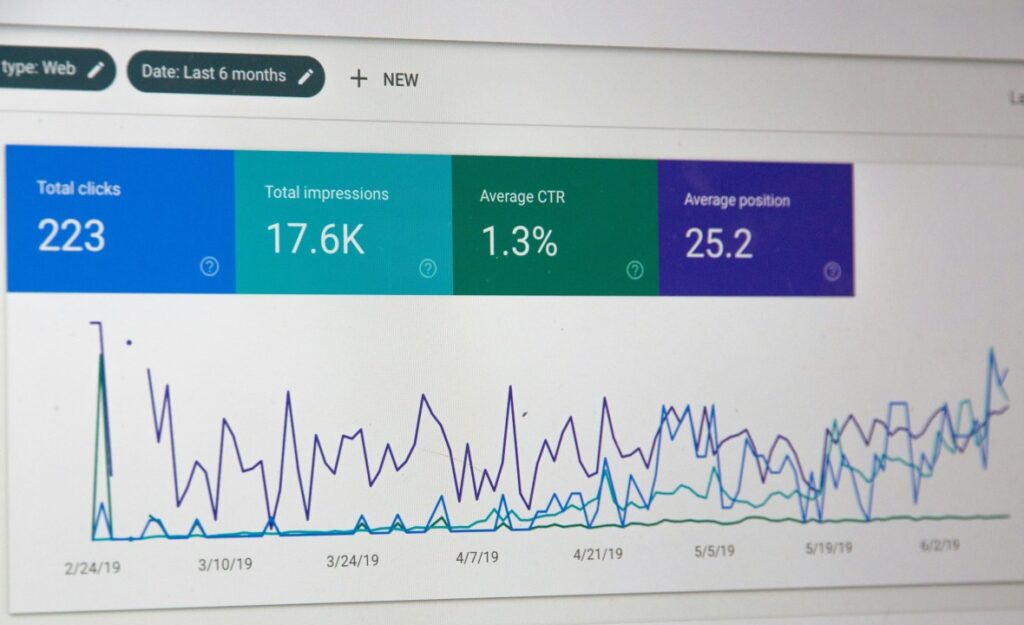
The best indicator of SEO health in the short term is a slow but steady rise in organic traffic (the number of people who get to know about you by using unpaid search results). With the help of such tools as Google Analytics (GA4), you need to find long-term trends instead of daily variability. It is not always as valuable as Month-over-Month but Year-over-Year is more likely to be more valuable since it takes note of seasonal lows in your industry.
2. Keyword Rankings
The thing about SEO is what you are ranking and your customers are using the words to refer. You can follow up your progress through the usage of the Google Search Console so as to observe the queries that are evoking your pages. Success in this case will be to push the needle on high intent keywords i.e. those words which mean that the user is willing to learn or purchase as opposed to general, generic words.
3. Click-Through Rate (CTR)
A high ranking doesn’t prove SEO success if users aren’t clicking your links. Your CTR is the percentage of those that view your listing and choose to visit. When you experience a great number of impressions but few clicks, then it is an indication that your title tags and metadata description are not effective enough to attract. The healthy CTR is evidence that your content appeals to the search purpose of the user even before he or she leaves his/her site.
4. User Engagement
As soon as a visitor comes, the way he acts is a good pointer of whether you have fulfilled the promise given in search results or not. Such metrics as Engagement rate and the average session duration can make you understand whether people are watching your content or just clicking the back button at once. High engagement implies that your site is authoritative and provides the answers users want.
5. Conversions & Goals
Traffic is a way to an end at the end of the day. You should monitor certain activities, including newsletters subscriptions, contact form, or even product purchase. With conversion tracking implemented in GA4(Google Analytics), you can directly claim these wins as a result of your organic activity, and it will show that you are getting high-value leads, and not mere window shoppers.
6. Backlinks & Authority
Backlinks represent a vote of confidence from other websites. An effective SEO plan will lead to an increasing amount of good-value links with established websites in your niche to your site. Such tools as Ahrefs or Moz may assist you in tracking your Domain Authority. An accumulating profile implies that your brand is taking root as an established leader in your field which again increases your ranking potential.
7. Technical SEO Health
A slugging or broken web site can never achieve its potential. Your technical health should also be audited on a regular basis with a specific emphasis on the Core Web Vitals such as the speed of page loading and mobile responsiveness. Unless the crawlers of Google can easily index your pages, or even when mobile visitors are thrilled with the site, your ranking will sooner or later be affected in one way or another despite the quality of the content that you provide.